Sunny Hostin holding up a copy of Queen of Exiles!!!
This is so exciting. Queen of Exiles is a Sunny Lit Pick!!! On August 2nd, she introduced Queen of Exiles to The View.
Meet Queen Louise. This is a historical fiction about a true queen, Hayti’s 1st and only queen. It’s a sweep tale which will take you through the politics and intrigues of the Haitian Court to the twists and turns of Regency and Victorian England and France and Italy. Queen Louise was a brave woman who dared to be Black, royal, and happy.
The audiobook performed by Robin Miles won an Earphone Award from Audiofile Magazine. It’s an Editor’s Choice Selection for the Historical Novel Society.
Riley’s historical novel feels timely and relevant, commemorating a time when Black women were queens. – Jodi Picoult, #1 New York Times bestselling author
I started writing essays because my mind battled deep disappointment over the state of division in my country. My consciousness is bias, tragically etched with memories of when character mattered. Remember when we all wanted to be president? I remember holding civic medals I’d won in elementary and high school. I recall lifting people up on pedestals and telling younger versions of ourselves, “That’s who I want to be. That’s who I want to emulate when we grow up.”
Heroes of the Haitian War —Empress Marie Claire, Warrior Gran Toya – Art by Tonya Engle for William Morrow—Sister Mother Warrior
That sentiment is gone. People in power are deeply flawed, or their flaws are more obvious. And it’s not just politicians. We look at sports heroes and entertainers and see waves of brokenness—people performing for show, lacking integrity, and becoming poster children of bad behavior. That is why authenticity feels so refreshing, why it can grip the zeitgeist of a nation and have us talking about it, creating YouTube videos and Subtacks on the subject, even spinning reels and threads—finding more ways to tap into our fount of creativity.
We are hungry for authenticity, for authentic creation.
Now, I’m not advocating for perfection. Every writer knows the pitfalls of striving for perfection. We wrestle with word choice, sentence structure, even the order of ideas. We can edit something so many times that our original vision becomes unrecognizable. Yet, we push forward because the act of creating is essential. It’s the breath in an artist’s lungs.
Our better angels—our novels of truth, our canvases of color, our songs of freedom, our quilts of existence, our visuals of life—are needed more than ever. We are hungry for authenticity, for authentic creation.
Our appetites are satiated in low-calorie burns. Scrolling for kicks, laughs, angry takes, and escape is common. But social media, the hellscape that it is, can be a respite or a drug. And I must say, I am confused about the self-induced stupor of tearful videos of people who voted against their own interests, now seeking the world’s sympathy as they grapple with consequences—lost jobs, lost funding, lost farms, and lost hopes. It’s painful to watch. It’s also jarring to see them admit that this consequence is only a problem now because they suffer. I did a podcast about the loss of empathy. I just didn’t expect an equivalent rise in blindness to FAFO.
I wish harm on no one, but these folks are putting themselves and their business out there and wonder why they are being mocked. Empathy and sympathy need to be learned and earned before they can be demanded from others.
And yet, here we are—still divided, still finding out. We could sulk. We could laugh. We could cry. But I believe the better thing to do is to keep moving forward. That’s how we—the collective, those of like minds, and even new converts to humanity—win. Everyone, we can win. We will win.
There’s a scene I wrote in Sister Mother Warrior—the lead-up to the Battle of Vertières, the drive to push the French out which ended the Haitian Revolution, this is a snippet of the audio performed by Adjoa Andoh and Robin Miles:
Staking the flagpole in the ground, he (Jean-Jacques Dessalines) stopped and looked out at his army. “They divide, but we are consolidated, one family. And this gives us victory…”
Then he gave the signal and pointed us to the hills. “Onward! We will win!” The battle cry of Nosakhere, “Mì nan du déji! We will win!” was music to my ears. Women and men cried out in all the mother tongues of the people born here and those stolen from Africa.
“Yebedi kunim,” Twi.
“A yoo ṣẹgun,” Yoruba.
“Nou pral genyen,” Kreyòl.
“Nous gagnerons,” French.
“Mì nan du déji,” blessed Fon.”
I love that scene—people of all races and nationalities gathering to defeat their common oppressors. Unified they drove the French from Haiti. It took everyone. In America, it will take all of us to win.
The True Fight
We’re not fighting with weapons of war—guns and tanks. We are fighting for minds. The power to unlock thought and passion is creation. How we got here doesn’t matter. Whether orderly or chaotic, it’s not about the process—it’s about the product. What are you making with the time you were given?
The battles can be as small as saving your money by avoiding fast fashion and shopping your closet. Eating and talking about life around the kitchen table instead of eating out. Supporting your library by using it and checking out books by your favorite authors is an act of resistance.
For those who harness their creative genes, making something, delivering art is the ultimate act of resistance. Creating ignites the brain, releasing endorphins and unlocking resilience. Instead of dwelling on despair, we must tap into our inner artist, writer, and creator to make magic in the medium of our choosing. I want this period of time to be a rebirth or renaissance for folk arts, for kitchen experimentation, for the novels we will talk about for the next seventy years.
For every creator out there, I know it feels difficult to make art right now. It feels worse when you know you did your part to keep the world from being set on fire. I often think of my farming grandparents, who lived in the Jim Crow South, educated eight children, and bought over 400 acres of land with mere pennies. If they could plant so many seeds in the face of lynchings, why are we letting fear of people who whine at the first moment of heat or being stoned by pea soup cause us despair? No one should keep us from doing what we must. No one.
History proves that perseverance defies expectations:
· Gran Toya led troops in hand-to-hand combat in her 60s during the Haitian Revolution.
· Fauja Singh began running marathons at 89, setting records in his 100s.
· Ray Kroc turned McDonald’s into a global empire in his 50s.
· Diana Nyad swam from Cuba to Florida at 64 after multiple failed attempts.
· Faith Ringgold gained major recognition for her story quilts in her 50s.
· Cicely Tyson was told she wouldn’t make it because of her dark skin; she won a Tony at 88 and worked until her passing at 96.
· Morgan Freeman became a household name in Driving Miss Daisy at nearly 50.
· Samuel L. Jackson landed Pulp Fiction at 46 after years of struggling with his career. Our Uncle Sam is now one of the highest grossing actors in Hollywood.
And, of course, there are the writers I’ve spoken about:
· Toni Morrison published The Bluest Eye at 39 and won the Nobel Prize in Literature at 62.
· Octavia Butler faced rejection for years before breaking through in sci-fi in her 40s.
To every creator, hear my voice: Grab your paper, pens, keyboards, fruits, spices, fabrics, glues, paints, resins, threads—whatever you have—and birth a miracle. Create. Art is the first and last sign of resistance.
The work isn’t done. We resist by creating. My art—my words—exist to empower Black women, foster sisterhood, and restore the world to a place where we are our brothers’ and sisters’ keepers. The ancestors say we will win. I believe them, and I believe in us.
· Barracoon: The Story of the Last “Black Cargo“ by Zora Neale Hurston – A firsthand account of survival and resilience from one of the last known survivors of the transatlantic slave trade.
Show notes include a list of the books mentioned in this broadcast. This week, I’m highlighting The Book Worm Bookshop through Bookshop.org.
This is a public episode. If you’d like to discuss this with other subscribers or get access to bonus episodes, visit vanessariley.substack.com/subscribe
Every writer, whether we want to admit it or not, is an entrepreneur. We create a product—a book—and then we turn around and sell it. Sometimes we sell part of our interest to a traditional publisher like Simon & Schuster or HarperCollins. Sometimes we go the indie route, selling directly to readers through a website or through a behemoth like Amazon. But no matter the path, one truth remains unshakable:
We are in business for ourselves.
We are the CEO, the marketing department, the shipping department, the PR team, and the person answering emails at 2 a.m.
We promote the product lines. We show up to the events. We handshake and livestream and book club ourselves into the good graces of the reading world.
I’m doing that now. As we gear up for the launch of Fire Sword and Sea, I’ll will be heading to D.C., Severna Park, Virginia, St. Louis, Mo, Austin, Texas, and of course Atlanta and all her glorious suburbs. Meeting readers is actually one of my favorite parts of the job. There’s nothing like seeing that gleam in a reader’s eye when they tell you what moved them, confused them, or delighted them.
There’s nothing like digging into the myths and the hidden histories that shaped a story.
And when I say hidden, I mean hidden. I will chase a fact to the end of the earth. I will travel to the places I’m writing about. I will battle through foreign language and archivists to get firsthand accounts. I want to return these people to you whole—the people who lived the stories I’m writing.
For Fire Sword and Sea, I boarded an old-time frigate—one that very easily could’ve been a pirate ship back in the day. I wanted to feel what it was like to sleep in a hammock practically touching tens of others, to understand how close the hull was to the crew cabin, to hear the groan of wood and water the same way they did.
There is no way you couldn’t hear the moans of the enslaved in the cargo hold. In the 1600s, human beings were the universal coin. People traded enslaved bodies like currency. That’s how they moved stolen property.
Moreover, the 1600s were wild. Theft was legal if you called it piracy. Danger was so normal it barely had a name. But it was also a time of reinvention. A time when you might have to disguise yourself—your gender, your class, your entire identity—to have the life you dreamed of.
And honestly? It doesn’t feel that far from being a small-business owner today. We change disguises, the various roles, to get our jobs done. And sometimes we forget why we got into this in the first place. We forget passion. And focus on market shifts. We ignore hunger to unleash something new into the world and get stuck in all the boxes that have to get checked—editing, research, marketing, PR, scheduling.
Recently I found people fight you or deprive you of resources when they don’t want your story told. In business, a Walmart will come and undercut you to price you out of the market. In the writing world, it will be the use of algorithms or the lack of oxygen to starve a book.
Sadly, some folks don’t want the truth. They don’t want to hear of a world where everyone could become a slave. They definitely don’t want to hear women who escaped and became pirates who led and commanded ships. I really think, some wanted me to write about a jolly old male crew singing sea shanties all day.
In Fire Sword and Sea, you’ll get adventure. You’ll get sailing crews. You might even get a spirit filled song asking for God’s vengeance. I wrote the truth. You’ll see the complicated leadership choices women in disguise had to make. You’ll see the danger of wanting something so badly that you risk everything to get it.
You’ll see the success, the heart break, and the compromises that may rot the soul.
Back to my small business.
Right now, I’m negotiating dates, confirming travel, juggling time zones, sorting release-week logistics—not to mention championing every other author whose book is coming out in January. It’s prime season. Prime real estate. Everyone wants and needs attention. I am no exception. If you preorder Fire Sword and Sea, I hope you feel the stories worth, believe the hassle, the grind, the late nights, and the tears.
But Lord… how many times have I said to myself, “I wish I had somebody else to do this”?
Let me bust a myth: even if you’re traditionally published, for the most part nobody is swooping in to handle your career or your new shiny book. You will still grind. You will still hustle. Traditional publishing gives glamorous promises—books everywhere, audiobooks, store distribution—but it does not give you a full marketing staff or sometimes the feeling that they give a damn.
Indies wear about 50,000 hats. Traditional authors wear about 32,000. Either way, your neck and back are still tired.
And that is why every writer—I don’t care which path you choose—has to ask:
What are you willing to do to have what you truly want?What are you willing to carry?How high are you willing to climb to make people hear your story?
Because at the end of the day, there is no one else. There’s no system. No machine. No cavalry.
There’s only you.You, shouting your story from every rooftop.You, standing on every chair.You, daring the world to listen.
We’re less than a month away now, and soon I’ll be taking Fire Sword and Sea across the country to talk about Jacquotte Delahaye, Lizzôa Erville, Michel Le Basque, Laurens de Graaf, and more: pirates who were—brave, reckless, brilliant. You will see them take to the took to the sea because no one else would do it for them.
Maybe that’s the lesson for all of us.
In the end, there is no one else.
There’s only the person who wants the dream badly enough to carry it forward.
And that person… is you.
This week’s booklist are books also coming out in January that need a little more love:
With Love, Harlem by ReShonda Tate — This is a fictionalized version of Hazel Scott’s story. She’s a jazz prodigy, a glamorous film star, a fierce advocate for civil rights, and she breaking barriers and rules.
The Seven Daughters of Dupree by Nikesha Elise Williams — A multi‑generational family epic following seven women of the Dupree lineage as they unearth dark secrets.
Burn Down the Master’s House by Clay Cane — A searing, urgent exploration of race, identity, and power in America.
Last First Kiss by Julian Winters — A second‑chance, slow‑burn romance about an Atlanta event planner reuniting with his first love when forced to cover a high-profile wedding.
Happy Habits for Successful Women by Valorie Burton — A practical, empowering guide that encourages women to adopt mindset and behavioral habits to become healthier, more resilient, and more aligned with their goals and values.
Behind These Walls by Yasmin Angoe — A twist‑driven psychological thriller in which a woman infiltrates a wealthy family’s mansion under false pretenses.
Murder From A to Z by V.M. Burns — A cozy‑mystery in which bookstore owner and amateur sleuth Samantha Washington and her sister uncover sinister dealings at a retirement village when a seemingly natural death turns suspicious.
Consider purchasing Fire Sword and Sea from Black Pearl Books or one of my partners in the fight, bookstore’s large and small who are in this with me.
Come on my readers. Let’s get everyone excited for January reads.
Show notes include a list of the books mentioned in this broadcast.
You can find my notes on Substack or on my website, VanessaRiley.com under the podcast link in the About tab.
So Boss, Our stories matter—tap like, hit subscribe, share, and let’s keep this movement going with Write of Passage.
Thank you for listening. Hopefully, you’ll come again. This is Vanessa Riley.
This is a public episode. If you’d like to discuss this with other subscribers or get access to bonus episodes, visit vanessariley.substack.com/subscribe
I believe in writing every day. Sometimes that means a hundred words. Sometimes 2500. Did you hear me say good or great words? No, I didn’t say that. Today, let’s talk about the actual writing life we should achieve.
A Writing Life You Can Actually Live
Three proposals, a Vermont retreat, and figuring out the writer I want to become.
Before I get started, this week’s download, the writing goals calculator, is available in my resource shop for free. Get the link at Substack or my website.
I just turned in three book proposals. One new idea. Two reimagined, tires kicked, engines inspected.
And absolutely no pages of an actual story.
I need my agents buy-in and I don’t know those people yet. We’re still being introduced. I’ve just stocked piled articles in Newspapers.com, Wikipedia and YouTube Rabbit holes, and the occasional ancient tome on my shelves.
But in Vermont—the writers who shared that retreat with me—gave me space to think about what I want my writing life to look like over the next three years. The answer kept coming back to multigenerational stories that tie our present to a vibrant, often hidden past. I want to focus on sisterhoods carrying love, ambition, secrets, and unfinished business across time.
Apparently, even after all these 31 books, I’m still asking: Who do I want to be when my writing life grows up?
Truthfully, that’s a question that all of us need to ask and keep asking. Heck, it’s the secret to staying young.
Everyone’s trying to figure themselves out. Writers do it on the page and in front of an audience.
As we figure ourselves out, we ask:
What do we want to do?
Whom do we want to become?
All while balancing the real world: Those other occupations that pay bills. And what about our relationships? Do we have them? Are we keeping them: Family, friendships, peers, romantic and platonic coexistence—all of this makes up our complicated and gloriously messy thing called our lives.
Did I mention the money? Most of us need it—unless we’re nepo babies, but sometimes that gift doesn’t work out. We all do need the money.
But I digress.
I’m not a writer who can sit still. You may have figured that out already. Yet every time I commit to a book idea, I need it to do more than sound interesting. It has to stir something inside me. It has to give me a reason to say: Yes. These are the people, the questions, the history I want to spend the next year or two researching, writing, revising, promoting, and talking about.
A proposal can be a few pages. The commitment behind it is considerably larger.
As authors, we spend a lot of time worrying about our brands. Some of us are still trying to figure out what that word means when applied to a human being who occasionally writes in pajamas and tiaras.
My slightly Type A personality has helped me think about the direction of my work from the beginning. I knew I wanted to tell historical stories. My first avenue was Christian fiction. Then came Regency romances. My work expanded into historical fiction that brings the Caribbean diaspora into view—a history my very Southern American education too often skipped or downplayed. Or obliterated—thanks to United Daughters of Confederacy.
What I like to write or read changes as my curiosity grows. Each book has helped me see more clearly what I want to explore in the next.
Vermont gave me time to listen to that curiosity without immediately demanding a word count from it.
Which brings me to this week’s lesson: Get comfortable in your own writing skin.
It’s tempting to want to be the writer who sits down and produces a 80,000-word book in three or four weeks. Sounds enviable, but often we miss the preparation that it took to get there. Some writers I know who work at the speed of light have already spent months deeply studying their subject, developing their characters, and figuring out the story—before sitting and writing.
We as voyeurs see the words arriving. We miss the months of work that made it possible.
My friends call me a fast writer. We’ll sort of. I can produce a lot of words when I’m sufficiently caffeinated, the research is done, the characters are clear, and I know where the story needs to go.
There have also been times when my Type A personality took the wheel and I checked myself into a hotel with room service to crank out ten or twenty thousand words in a day.
That habit can get expensive in more ways than hotel bills.
Sleep deprivation. Health. Family time. Isolation. Everything leaning out of alignment with that elusive word: balance.
Even if I can do this pace, I must consider what it costs me.
This week’s writing tool is the word-count chart. Download it. Keep it displayed. It shows how steady effort adds up and gives you a realistic sense of how long a draft might take at your current, realistic pace.
A hundred words a day.
A thousand words a week. Whatever fits the life you actually have—these numbers help you make a commitment and understand how long it will take before you can type “the end.”
I think some people become frustrated because writing a book “takes too long.” They have a wonderful idea, perhaps even a strong beginning. Then the middle stretches out ahead of them. Life gets busy. The ending seems impossibly far away.
The story goes quiet in a notebook or a forgotten Word document.
Writing a book—even writing a blog post—requires more than motivation. I believe you need fire in your belly. I want you to care deeply about what you’re putting on the page.
But you also need to know yourself well enough to help that fire survive an ordinary Tuesday.
How much time can you give this work? How quickly do you usually write? What preparation helps you move forward? What schedule can you return to when the initial excitement settles down?
I believe in writing every day. Sometimes that means five hundred words.
I didn’t say good words.
For me, much of the magic happens in editing, and I need something on the page to edit.
If you’re a weekend writer, that’s okay, too. Build the habit around the time you have. Make writing important enough that it gets a place in your life.
Be careful about repeatedly teaching yourself that your writing time is the first thing you can give away. An emergency is an emergency. But when every invitation, errand, or passing distraction takes precedence, you may find yourself waiting for time that never arrives.
Writing is a commitment.
I know. A scary word for some folks these days.
You can love it and fight with it. You can get frustrated, need a break, and come back wondering why these people in your head won’t behave. There will be highs and lows, rejections and wins, sentences you adore, and a whole chapter you would prefer never to discuss again.
That’s the love story of writing.
I want a writing life I can look back on and say: Yes, I probably should have gotten a little more sleep. But I love what we’ve done together.
So as I wait to get properly acquainted with the people in at least one of those three proposals, I’m focused on sustaining a life that will help me tell these stories—and still leave room to live my own.
You should too.
This week’s book list includes my Vermont crew’s books:
* The Inevitable Undoing of Zahara Douglass by Leslye Penelope — A woman searching for the missing twin sister no one else remembers uncovers family secrets and supernatural powers that could threaten the world.
* Private Bodyguard by Veronica Forand — A security operative must protect the tech billionaire she blames for her brother’s breakdown while confronting their tangled past and unexpected attraction.
* Where the False Gods Dwell by Denny S. Bryce — Three women accompanying Katherine Dunham’s 1935 research expedition to Jamaica forge an unlikely sisterhood as personal secrets and a deadly storm threaten their futures.
* Analiese Rising by Brenda Drake — A teenager investigating a mysterious list discovers she can raise the dead and becomes entangled in a dangerous war between gods.
* Southern Discomfort by Sharina Harris (Preorder)— After a scandal threatens her career, a vegan influencer returns home to repair her relationship with her mother and reconnect with her family’s magical heritage.
* Seasick by Kristin Cast and Pintip Dunn — Two former best friends must work together to unmask a killer when a celebratory yacht trip with their privileged classmates turns deadly.
* A Deal at Dawn by Vanessa Riley — A viscountess strikes a desperate bargain with the ailing duke she once loved to regain access to their daughter, confronting betrayal, rekindled passion, and threats to their child’s future.
And Mahogany Books is my Indie of the week. Check them out for these books or any of mine.
You can also try one of my partners in the fight, bookstores large and small, who are in the trenches with me.
You can find my notes on Substack or on my website, VanessaRiley.com, under the podcast link in the About tab.
Here’s the link for today’s free workbook download.
Let’s write together. I need you. That’s the truth. Like, share, subscribe, and stay connected to Write of Passage.
Thank you for being here.
I want you to come again. This is Vanessa Riley.
This is a public episode. If you’d like to discuss this with other subscribers or get access to bonus episodes, visit vanessariley.substack.com/subscribe
When I think of Christmas Time, the lilt of bells and the memories I associate with them flood my mind. A warmth grips me, hugging me tighter than my best spencer. To me, bells always sound happy, giving an ethereal lightness and glow to the heart of the hearer. I prefer the sounds of cast bells. Their song is richer and more full-bodied than their thin sheet-metal cousins.
England is steeped in both, and bell-ringing is a part of the culture and history. The tradition of casting English bells predates the Middle Ages. Today, two of her best bellfounders survive, Taylors of Loughborough (1400) and Mears and Stainbank of Croydon (1570).
Moreover, bells and bell-ringing played a role in Regency life. Bells rang to announce a church service. This service would be on Christmas Day as oppose to the Christmas Eve masses we are accustomed to.
I can imagine hearing the peal (the loud prolonged ringing) of St. George’s eight hemispherical bells tolling on the morn of December 25. Maybe the bell ringers would perform a change ringing where they would display a festive pattern of bell tolls. It wouldn’t be a familiar holiday tune but an exquisite series of tones set to a rhythm indicative of the ringers’ skills. Change ringing is still popular today, in England and around the world.
Church bells would also ring for weddings. Although, it would probably be unusual (in my opinion), I couldn’t find any prohibitions to having a Christmas Day wedding. If Christmas fell on a Sunday after the banns have been successfully read, what cleric would stop the couple and delay the ringing of another successful match?
Amidst the joy, bells of London could also possess a seamy side. They are said to have been rung at Bethlehem Hospital (Bedlam) announcing to gawkers to come stare at the mentally unstable patients. I would hope that Christmas Day would be spared, but not the whole of December.
Perhaps after leaving St. George’s, if I were walking toward a coffee shop, a Morris dancer (or a troupe of Morris dancers) would perform in front of me. The bells strapped below their knees would tinkle with each of their merry steps. The Morris dancer tradition dates back to 15th Century in England. Its earliest notations suggests it was a dance that both men and women could partake in, but at the time of the Regency, it was mostly a male endeavor.
Walking a little farther, I might hear bells strapped to a horse team or the ringing of bells on residences which have not installed a doorknocker. Those households wouldn’t have the advance warning of the importance of their visitor, as a footman’s successive knocks would detail, just the egalitarian jingle for all who darken their thresholds. Well, hopefully these homes are prepared for all coming to sup for Christmas dinner.
Trudging a little farther, I hear a dull peal, one laced with sorrow. Bells were also used to announce deaths. Continuing a tradition started in the Middle Ages, church bells were rung to drive away evil spirits from the departed souls. My heart breaks for anyone losing a loved one, particularly during a season meant for love of family and friends. My continued prayer is for the families of Newtown, Connecticut. Here at Regency Reflections/ChristianRegency.com our hearts are broken, too. The ringing of twenty-six bells are too many.
References:
RWA’s Beau Monde Chapter
Oxford’s City Branch of Church Bell Ringers
Central Council of Church Bell Ringers
Forrest, John. The History of Morris Dancing, 1483–1750. Cambridge: James Clarke & Co Ltd, 1999.
Kendrick Lamar’s Super Bowl LIX halftime performance during the game between the Kansas City Chiefs and the Philadelphia Eagles has set the internet—and much of the world—abuzz. Nineteen Minutes by Jodi Picoult is the most banned book in America for challenging the way people see the world. I’m sure those same folks will be coming for Kendrick’s thirteen minutes for challenging the way the world operates.
Less than a week later, scholars, pontificators and fools offered hot takes, deep dives, and debates about every minute of the performance. Those versed in Black scholarship loved it. Others criticized it. And, there were plenty of opinions and outright lies circulating. But here’s what’s undeniable: 133.5 million people watched the halftime show at Caesars Superdome, making it the most-watched in Super Bowl history. According to Roc Nation, Apple Music and the NFL, this number beats those who watched the Fox broadcast of the game which averaged 126 Million viewers. That 7.5 million more tuning into halftime than game time.
Context is King: History of the Halftime Show
Let’s talk about origins. The Super Bowl, the annual championship game of the NFL, has been played since 1967, with college marching bands providing halftime entertainment.
Grambling State University, a HBCU had its marching band perform at Super Bowl II (1968).
In 1972, the first halftime show featuring a Black performer, non-marching band member, was Ella Fitzgerald at Super Bowl VI in Miami where she sang Mack the Knife.
Super Bowl IX (1975) in New Orleans paid tribute to Duke Ellington with Grambling State’s Marching Band and the Mercer Ellington Orchestra.
When was the next Black moment? We have to skip a bunch of years to get to 1991, Super Bowl XXV where the incomparable Whitney Houston delivered a stirring rendition of The Star-Spangled Banner, but she wasn’t the halftime headliner—New Kids on the Block were. In 1993, Michael Jackson, the 1st Black performer to headline the halftime show dazzles the crowds at Super Bowl XXVII (27) and sets the standard for pop stars and the future of football’s biggest event. The King of Pop owned the stage and every moment of his performance. If 100,000 people had actually turned off their TVs like they claimed they did, Michael Jackson would still hold the record, with an audience of 133.4 million viewers.
Other notable performances featuring Black artists across the lengthy history of halftime shows include:
• Super Bowl XXII (22nd, 1988) – Chubby Checker appears with the Rockettes and 88 grand piano players.
• Super Bowl XXIX (29th, 1995) – Patti LaBelle & Teddy Pendergrass were featured along with Tony Bennett.
• Super Bowl XXX (30th, 1996) – Diana Ross dazzled in a red gown and even changed outfits mid-show.
• Super Bowl XXXI (31st, 1997) – A blend of James Brown appearing with ZZ Top and The Blues Brothers Band.
• Super Bowl XXXII (32nd, 1998) – A Motown tribute featured The Temptations, Smokey Robinson, Martha Reeves & The Vandellas, Queen Latifah, and Boyz II Men. Watching those young men of Boyz II Men sing about their mothers hits differently now, especially juxtaposed with Lamar’s solitary silhouette atop the GNX in New Orleans and his dancers, young men gathered under a street lamp.
• Super Bowl XXXIII (33rd, 1999) – Stevie Wonder joins Gloria Estefan and Big Bad Voodoo Daddy.
• Super Bowl XXXIV (34th, 2000) – Toni Braxton is featured.
• Super Bowl XXXV (35th, 2001) – Featured Mary J. Blige and Nelly.
So, let’s be clear: Black performers at the Super Bowl are not new. Hip-hop and rap at the Super Bowl are not new. For those suddenly enraged—why weren’t you bothered during the 39 other years when Black artists weren’t featured or headlined? The selection process has always been based on merit—the most talented for the job, period. Right?
And with DEI (diversity, equity, and inclusion) now the new taboo, let me ask: Why do some get upset when things aren’t diverse—when people who look like them aren’t centered or given an extra slot or quota on stage? Do you want equity and inclusion or not?
Kendrick Lamar is highly qualified. He won the 2018 Pulitzer Prize in Music for his album DAMN. He’s a 27-time Grammy winner, and one cannot deny that his 2024 diss track, Not Like Us, has the world on fire. Please, show me someone with better credentials who’s willing to perform a 13-minute Super Bowl halftime show—for free.
Let’s Dive into the Performance
Lights flash. I see nine squares and glowing X’s and O’s. I wonder—are we about to get Tic-Tac-Toe or something else? In the background, a power bar, formed of stadium lights or drones, begins to load. I know we’re about to witness something special.
More lights flash. The bar is almost at 100%, and I sit on the edge of my seat, expecting a high level of storytelling artistry from Lamar. According to Britannica, art is a visual object or experience consciously created through an expression of skill or imagination—and right now, skill and imagination are exactly what we need.
In a flash, a “Start Here” sign and arrow appear, pointing to the lone figure on the hood of a Buick GNX. Kendrick Lamar, a young Black man, crouches on the car. The image evokes loneliness—it’s dramatic, and I’m locked in as the gleaming black Buick GNX (Grand National Experimental) transforms into a clown car, packed with dancers spilling out. So many exit the vehicle that I later learn the seating had to be removed to fit them all into that tight, cramped space—not unlike bodies crammed into the hulls of ships.
On Instagram, Lamar writes about authenticity: “In the moment of confusion, the best thing you can do is find a GNX. Make you realize the only thing that matters in life is that original paperwork. That TL2 code. 1 of 547.”
What does original paperwork mean when you’re the descendant of chattel slavery? Is it the slave ship’s manifest that documented the theft of ancestors? The bill of sale from massas in the States or Grand Blancs in the Caribbean, depending on where your roots were auctioned off? Or is it the manumission papers, declaring your freedom—bought at a price?
This leads me down another rabbit hole: authenticity—who is American and who is not? In a country that often forgets to be kind to the foreigner (Leviticus 19:33-34), or that it was founded by immigrants—many seeking religious freedom, a fresh economic start, or escape from oppression—this question cuts deep. It’s a scar that never fully heals.
Did you know that, in the past—like I wrote about in Island Queen—people with any tint to their skin have had to carry manumission papers or proof of their free status to avoid being accosted? Many around the nation feel this burden now. We’re still caught in this cycle because we’ve banned the books that teach history and empathy.
Back to Football—America’s Game
I highly recommend reading Moving the Chains: The Civil Rights Protest That Saved the Saints and Transformed New Orleans by Erin Grayson Sapp, which examines the 1965 AFL All-Star Game boycott, where players protested against racial discrimination in New Orleans.
Another must-read is Race and Football in America: The Life and Legacy of George Taliaferro by Dawn Knight, chronicling the journey of George Taliaferro, the first African American drafted by an NFL team, and the challenges he faced.
Red, White, & Blues of Uncle Sam
The visuals cut to Uncle Sam—portrayed by Academy Honorary Award winner Samuel L. Jackson. With a film career grossing over $27 billion worldwide, making him the highest-grossing actor of all time, Jackson embodies this iconic American figure. Some might be wondering, What in the DEI is going on with this Black version of a fictional Americana, but it soon becomes clear: Uncle Sam is here to keep Lamar in line.
Jackson plays Uncle Sam as Uncle Tom. Uncle Tom’s Cabin, Harriet Beecher Stowe’s 1852 abolitionist novel, portrayed White men as morally bankrupt and Black individuals as either complicit in oppression or suffering under it. The book also depicted White women as the moral conscience of a system they benefited from, yet remained angelic through their Christian preaching. The novel ends with the enslaved Tom dying because he refuses to betray two Black women who have escaped. As he dies, he forgives his abusers.
The novel’s humane portrayal of enslaved people and its righteous female characters were said to have contributed to the start of the Civil War. Enraged Southerners banned the book. In the 1940s, Langston Hughes attempted to revive interest in it, but Richard Wright and James Baldwin criticized it, arguing that it promoted the image of an “Uncle Tom”—a Black person subservient to Whites or complicit in oppression.
In Lamar’s performance, Uncle Sam enforces the “party line” of American success. At times, he antagonizes Lamar, telling him, “You’re too loud, too reckless, too ghetto.” He dictates that since Lamar refuse to comply with the rules of the American game, he must be penalized: “Deduct one life.”
The death count is brutal—and so is American history, even without including the countless lives lost under enslavement:
• Fort Pillow Massacre (1864): Confederate soldiers slaughtered surrendering African American Federal troops stationed at Fort Pillow, Tennessee. Between 277 and 295 Union troops were killed.
• Memphis Massacre (1866): A White mob murdered 46 African Americans, most of whom were Union veterans.
• New Orleans Massacre (1866): A White mob killed 35 Black citizens and wounded 100 for peacefully gathering in support of a political meeting.
• Colfax Massacre (1873): A White militia massacred approximately 150 African American militia members who were attempting to surrender in Colfax, Louisiana.
• Wilmington Massacre (1898): A premeditated attack left 60 Black Americans dead as White supremacists sought to eliminate African American participation in government and permanently disenfranchise Black citizens.
• Atlanta Race Riot (1906): White mobs killed at least 12 African Americans and burned over 1,000 homes and businesses in Black neighborhoods.
• Springfield Race Riot (1908): The Illinois state militia was called to quell the chaos as a White mob shot innocent people, burned homes, looted stores, and mutilated and lynched Black residents.
• Chicago Race Riot (1919): The “Red Summer” began when a Black youth was stoned to death for swimming in an area reserved for Whites. Over 13 days of lawlessness, 23 African Americans were killed, 537 were injured, and 1,000 Black families were left homeless.
• Ocoee Massacre (1920): A massacre of Black residents in Ocoee, Florida, left approximately 30 dead.
• Tulsa Race Massacre (1921): Tulsa’s prosperous Black neighborhood of Greenwood, known as Black Wall Street, was destroyed—1,400 homes and businesses burned, nearly 10,000 people left homeless. Vanessa Miller’s The Filling Station is a poignant portrayal of the massacre and the resilient rebuilding that followed.
The sacrifice of Black lives makes Lamar’s imagery of tangled bodies forming the flag raw. It hit me in the pit of my stomach. I live knowing that the sacrifices and body counts will continue to rise, forming trending hashtags: #BreonnaTaylor #AhmaudArbery #TamirRice #TrayvonMartin #GeorgeFloyd
The Movement of Dancers
The visuals of Black dancers dressed in red, white, and blue moving around what is now clearly the game receiver mirror how many of us are on the X button—saying yes to conforming, to getting along, to advancing, to avoiding having our dreams burned up by a jealous or misinformed mob. When the dancers near the circle stage—the reject button—they enter a staircase that leads to a slope, which brings them back to where they started. Is that a metaphor suggesting we are better off right where we began before chasing conformance?
The Most Misunderstood Part: Serena Williams
Serena Williams, who once dated Drake, danced the Crip Walk on stage. Distraught commentators ground their teeth, calling it disrespectful for a forty-year-old mother to be dancing on the figurative grave of her ex.
The caucasity of this is the belief that this exhibition was about a man or a former relationship. Serena Williams is not just some “baby mother.” She was ranked No. 1 in the world in women’s singles by the Women’s Tennis Association (WTA) for 319 weeks—the third-most of all time. Williams has won 73 WTA Tour-level singles titles, including 23 major women’s singles titles. She is the only player to accomplish a career Golden Slam in both singles and doubles.
The Crip Walk is a celebration, notably adopted by her folks from her city of Compton, and it symbolizes the alliance of California street gangs, the Crips— as in Crips vs. Bloods. No, Serena is not part of a gang. But like the dance’s founder, Henry Crip—a Harlem dance legend who lost an arm and a leg in a car accident—she celebrates moving forward and achieving. Williams first did the Crip Walk in 2012 at Wimbledon, eliciting massive backlash for celebrating a huge win—for the girl from Compton.
Seeing her dance freely, hair flowing, I think of the Tignon Laws of New Orleans, which I mentioned in my podcast Consent in the Time When a Black Woman Can Say No, and the long history of policing Black women’s bodies. In Serena, I saw joy and celebration. If I am to think of Drake at all—a man who has used Serena’s name in diss songs—I see freedom from a toxic relationship. That’s cathartic.
Ok, Now the Hotep Or Too Deep to be Real Take
Lamar does say he is a stargazer, so maybe the 16 stars on Uncle Sam’s jacket resemble the Little Dipper. if I squint, I can see it. But the talk online about the design representing the 16 free states—states that prohibited slavery between 1850 and 1858—seems like a stretch. These arbitrary dates are supposedly tied to U.S. naval activities interrupting the slave trade.
I’m not buying this. The U.S. Navy’s role against stopping transport began in 1820 when warships deployed off West Africa tried to catch American slave ships, but enforcement was sporadic until the Navy deployed a permanent African Squadron in 1842. Last time I checked, 1850 and 1842 are different years. A rounding error won’t make them the same.
By 1858, there were 32 states in the Union, including Minnesota, which was admitted on May 11, 1858. California was the 31st state, admitted on September 9, 1850. If I count the list of free states—states that prohibited slavery—I get 17:
1. Pennsylvania – December 12, 1787
2. New Jersey – December 18, 1787
3. Connecticut – January 9, 1788
4. Massachusetts – February 6, 1788
5. New Hampshire – June 21, 1788
6. New York – July 26, 1788
7. Rhode Island – May 29, 1790
8. Vermont – March 4, 1791
9. Ohio – March 1, 1803
10. Indiana – December 11, 1816
11. Illinois – December 3, 1818
12. Maine – March 15, 1820
13. Michigan – January 26, 1837
14. Iowa – December 28, 1846
15. Wisconsin – May 29, 1848
16. California – September 9, 1850
17. Minnesota – May 11, 1858
So the math and the facts aren’t jiving. Kendrick Lamar is very precise in his lyrics. An arbitrary number or pattern doesn’t seem to be his M.O. I could stretch and say he mentions losing 16 friends in his song “wacced out murals,” but then I’m just spitballing.
Not everything has a direct meaning, but that’s the beauty of art—it can mean many different things to different people. Kendrick Lamar and his performance is art and it should be applauded for making us all stop and think.
Ending the American Game
As the last notes of “Not Like Us” finishes, Lamar and company launch into “TV Off.” When he finishes the rap, he holds up a virtual remote, turns it off, and forces the stage to go dark. In lights, we see the sign: Game Over. Does he mean the American game is over because we refuse to learn from the past or that he’s stop playing the game? Lights out—Is that symbolic of a Revolution being televised until it’s not? Is the American Game going to stop feeding on Black life, Black culture, and Black breath? What happens if every American, turns off the TV, the cellphone, social media, etc. and stops playing the game?
America is founded with the God-given right to have differences of opinions. Of being able to choose your path, to dream the biggest dreams, and to make them happen—on or off the field. Whether we play the game or not, movement, not standing still, is how we inch forward toward the goal posts. It’s how we will awaken and form a more perfect union.
Images are screenshots of ROC Nation and Apple Music feeds.
This is a public episode. If you’d like to discuss this with other subscribers or get access to bonus episodes, visit vanessariley.substack.com/subscribe
For the women who burn it all down, find beauty in ashes.
For the dreamers left behind—keep sailing.”
That is the dedication of Fire Sword and Sea. Four lines that came to me as a battle cry. It’s a reminder that womanhood, especially when tied to leadership, has never been a straight line. It bends, curves, breaks, and rebuilds. It demands courage. It requires clarity. And sometimes, it lusts for fire.
Recently, a friend—someone who does not read much historical fiction—got an early look at Fire Sword and Sea. She’s a reader of self-help, of business strategy, of the occasional thriller you can sneak into her hands. But she said something that stopped me cold:
“Vanessa, you wrote a book about leadership—about women’s leadership.”
At first, I blinked. That wasn’t the answer I was expecting. Yes, my heroine Jacquotte Delahaye is a pirate captain. And yes, pirate captains are leaders by definition. But what my friend saw was something deeper—something I wasn’t consciously aiming for but had apparently woven into every scene, every strike of a sword.
On a pirate ship in the 1600s, leadership wasn’t inherited; it was earned. Pirate vessels operated like meritocracies—any race, any nationality could join, as long as they could pull their weight. Jacquotte rises the only way a woman in that era could: in disguise. Hidden behind lies, she relies on her skill with a rapier, her mastery of the sea, her stamina and grit, and her ability to steer a stolen ship through storms both literal and moral.
Pirates didn’t buy their ships. They took them. And Jacquotte climbs the ladder of command one impossible task at a time.
Through Fire Sword and Sea, we see her rise, her missteps, her victories, her bruises—physical and spiritual. And that, my friend said, is leadership.
But leadership—especially women’s leadership—is a complicated beast.
We often talk about the women who lead in boardrooms, in startups, in medicine, in politics. But historically—and even now—women occupy the caregiver role by default. According to the report released in March by US Healthcare Workforce, 87 percent of nurses are women. The Bureau of Labor Statistics says 80 percent of healthcare workers are women. We are the hospice nurses, the physician assistants, the physical therapists. The ones tending to the young, the old, the fading, the forgotten. And in the 1600s, this was even more pronounced. Before physicians, there were women who gathered herbs, mixed tinctures, whispered prayers, held hands, and ushered people into life and into death and sometimes back again.
To lead, sometimes that caregiving must be set aside. And that choice weighs heavy on nurturers.
Then there is modernity:
How does being a mother affect leadership?
How does being a wife?
How does being the one expected to build the home, nurture the family, care for the elders and in-laws?
I remember climbing the corporate ladder and watching women I admired—women who mentored me—delay motherhood until the last biologically viable second. One of my favorite bosses, a brilliant Irish PhD in physics, once had suits tailored specifically to hide her pregnancy. Because at that time, maternity leave and career advancement could not coexist in the same equation.
This is the landscape women navigate. A landscape Jacquotte would have known in a different form, in a different century—but it’s still hauntingly familiar.
My friend, though, wanted to talk about the dedication.
For the women who do right.
For the women who do wrong for the right reasons.
Because in leadership, there is always a moment—a crossroads—when doing the right thing may mean becoming complicit in something that isn’t right. Sometimes survival demands choices you would never make in a perfect world.
We see the consequences of hubris and hard choices in our real world today. Not to get too political, but right now there is a crisis in the Caribbean that breaks my heart. U.S. forces have fired on fishing vessels, claiming they carried drugs. But no proof has been given. Witness accounts suggest at least one boat was attacked without cause, leaving two people clinging for life. It seems a second strike was orders to kill defenseless victims.
If drugs were aboard, they now sit at the bottom of the sea—destroyed by the same guns that struck the fishermen. This needless killing violates the Geneva Convention, the rules of war and basic humanity.
And now investigations must happen to see how leadership failed and who was complicit in illegal orders. It is a horrible situation when the people in all levels of the chain of command fail. It’s horrid, that those below followed orders that were illegal. Leadership—good or bad—always has accomplices.
And that is part of the burden.
In Fire Sword and Sea, Jacquotte and her crew face their own moral storms. In the 1600s, the “currency” of the seas was not just gold or silver. It was people. African people. A horrid truth I confronted in my research was located in merchant records.
I saw 17 guinea for a pewter bowl.
At first, I thought they meant the coin minted for King Charles II with gold from the country Guinea. But the coin of popularity in the Caribbean. The Spanish silver pieces of eight were. It was upon further digging that these records were referring to people. Everyone from Africa are commonly called Guinea in the 1600s.
So a pewter vessel was valued at seventeen Guinea. Seventeen human lives.
Imagine a world where a pewter bowl was worth more than a child.
So yes—Fire Sword and Sea has action and saga and mystery. But beneath the adventure, it wrestles with leadership, complicity, survival, and the cost of chasing freedom in a world built on stolen bodies.
This book asks questions:
What does it take to lead?
What is the price of doing the right thing?
What happens when you must choose between your principles and your people?
And how do women—across eras—navigate these impossible intersections of duty, ambition, and care?
I cannot wait to have deeper conversations with you about these choices and about leadership.
And so I return to Fire Sword and Sea’s dedication:
For the women who do right.
For the women who do wrong for the right reasons.
For the women who burn it all down, find beauty in ashes.
For the dreamers left behind—keep sailing.”
Books to get us diving deeper into leadership are:
A reflective nonfiction exploration of feminism, aging, ambition, and the fight for autonomy across a lifetime.
Take Care of Them Like My Own — Dr. Ala Stanford: A powerful memoir of a Black woman surgeon who turned grief, racism, and systemic neglect into a movement that vaccinated and cared for thousands during COVID‑19. Soror Ala is running for congress to lead the 3rd congressional district of Philadelphia.
A bold, haunting retelling that gives Medusa her voice back, revealing the girl behind the myth and exploring power, wrath, injustice, and the cost of becoming the monster the world insists you are.
A sweeping tale of ambition, generational power, and the women who shape empires from the shadows, exploring the sacrifices, strategies, and emotional costs of building—and defending—a legacy.
We are six weeks away from the release of course Fire Sword and Sea on January 13th, 2026. Caribbean women pirates—Black women pirates join French and Indigenous women to sail the seas. Review this novel in Edelweiss and NetGalley. Vote for it on Goodreads. Help me get folks talking about this novel.
Consider purchasing Fire Sword and Sea from Baldwin and Company or one of my partners in the fight, bookstore’s large and small who are in this with me.
Come on my readers. Let’s get everyone excited for truth.
Show notes include a list of the books mentioned in this broadcast.
You can find my notes on Substack or on my website, VanessaRiley.com under the podcast link in the About tab.
Don’t let this be a one-time thing—like, share, and subscribe to join the growing family at Write of Passage. Welcome aboard this ship. I heart you.
Thank you for listening. Hopefully, you’ll come again. This is Vanessa Riley.
This is a public episode. If you’d like to discuss this with other subscribers or get access to bonus episodes, visit vanessariley.substack.com/subscribe
For me, the most hectic—and refreshing—moment is when one book is finished and turned in. My mind doesn’t like to be idle, so I find things to do. I read. I explore. I bake. And eventually, I reach that moment when my brain says, “The heck with this. Let’s write. The question becomes, what do I write.”
Finding the Idea You Have to Write
Getting started is one of the hardest things a writer has to do.
Where do you begin when you want to write the next great American novel? My first piece of advice is simple: take your expectations down.
That doesn’t mean you shouldn’t dream big. Dream as big as you want. But no great novel can come from you if you aren’t committed to writing the novel in the first place.
Writing is one of those endeavors where best intentions, wishes, and all the things you would’ve, should’ve, could’ve written don’t count for much. At some point, you have to show up and put words on paper. That’s how you win the game—or, more accurately, how you put yourself in the game.
Before there are chapters, however, there is an idea.
And an idea doesn’t have to arrive fully formed.
Where Story Ideas Come From
For me, book ideas tend to come in three ways: a person, a circumstance, or a fascination that won’t let me go.
Because I write historical fiction, I may happen upon an unusual fact or discover a person in history who immediately piques my interest. Something about that person catches hold of me, and I need to know more.
That happened with Queen of Exiles. While researching and writing Sister Mother Warrior, I encountered the story of Marie-Louise Coidavid Christophe, wife of Henri Christophe. Christophe rose as a soldier in the Haitian Revolution to the liberator Dessalines’s right hand man and then became the king of Haiti, which made Marie-Louise its queen. But what fascinated me was how this simple hotelier’s daughter grew to handle herself on the world stage through building a kingdom in Haiti, then in exile arriving to Europe.
I wanted to know her.
Who was this woman? What happened to her? What did she experience? How did someone live through such extraordinary transformations?
That curiosity became a story.
Sometimes, though, it isn’t a person. It’s a circumstance.
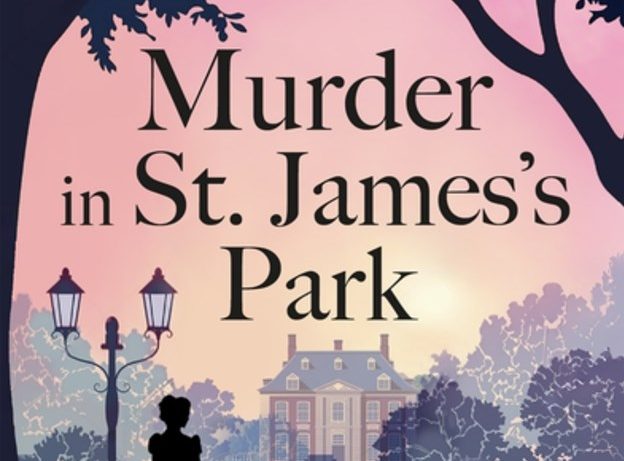
My Lady Worthing Mysteries grew partly from my fascination with the complicated political and social world surrounding abolition, race, class, and freedom in Regency England. But another piece came from something much more personal: watching Murder, She Wrote with my mother. Those seemingly unrelated things could live together in my imagination—an amateur sleuth stumbling across murders and a historical world filled with political intrigue—catnip.
Thus a circumstance became a playground for story.
And sometimes an idea begins with nothing more complicated than something you can’t stop thinking about.
A question. An image. An experience. Something strange you read. Something that happened to you. Something you wish had happened. Something that makes you angry, delighted, curious, or confused.
Pay attention to the thoughts that keep coming back.
They may be trying to tell you something.
The StoryMetric™ Idea Assessment: Start With the Bubble
This is why I created the StoryMetric™ Idea Assessment process. That’s a lot of fancy words for the way. Vanessa’s brain works and how she teaches story craft.
As an engineer, I love spreadsheets and forms. But I love love, magical forms that help build to something. So I built a bubble form where I throw ideas into them, play with those ideas, question them, and gradually refine them until I find the story I know I have to tell.
At the beginning, I don’t want perfection. I want possibility.
The Idea Bubble is deliberately simple. Give yourself ten minutes and fill the bubbles. One way to get moving is to use a basic story pattern:
Subject + Verb + Object + Conflict
A girl wants to become an astronaut, but she’s afraid of heights.
Is that your novel? Maybe. Maybe not.
That’s not the point.
The point is that you’ve made something where nothing existed before.
Fill another bubble. And another.
Don’t edit yourself, not yet. Don’t decide whether an idea is literary enough, commercial enough, original enough, or important enough. Generate first. Assessment comes later.
Then take the ideas that create a spark and begin asking questions.
What is the situation or circumstance?
What fascinates me about it?
What question keeps returning?
What connection do I have to this idea—something I’ve lived, witnessed, inherited, studied, or wondered about?
Now we’re moving from having an idea to discovering whether there might be a story inside it.
Give Yourself Permission to Want What You Want
The next question is one writers sometimes don’t want to answer:
Why do I want to write this?
Maybe you’ve never heard of this subject before and you’re fascinated.
Maybe you want to explore something you don’t understand.
Maybe there’s something you want to say that might encourage another person.
Maybe this is personal.
Maybe you simply want to write.
Or let’s get mercenary: maybe you think the idea will sell.
That’s allowed, too.
None of these motivations is inherently wrong.
Some writing may be primarily for you. Some may be intended for a particular community of readers. Some may be a gift you want to put into the world. Some may be unabashedly commercial. Some may begin as one of these and become another.
I’m Vanessa Riley, and I’m giving you permission to write about anything you absolutely want.
You don’t know how far an idea will reach when you’re standing at the beginning.
And there are no stupid ideas.
There are no trivial ideas.
If you look at an idea and think, That’s stupid, my response is that you may simply not have developed it enough yet.
Question it before you discard it.
Turn it around. Make it more specific. Find the conflict. Change the circumstances. Ask what fascinates you about it. Ask why it keeps coming back.
The important thing at this stage is clarity—not justification.
What Kind of Story Might This Be
Once an idea survives that first examination, I start asking another question:
You’re still in a nebulous phase. You aren’t signing a contract with a genre. You’re forming a hypothesis.
But having some idea of where you’re going can begin to tell you what you need to learn.
Genre starts shaping your research. It gives you craft questions. It helps you identify the books you should be reading. It begins to reveal what kind of experience a future reader might expect.
So choose a direction without treating it as a permanent label.
Then test it.
Genre Is Also a Promise
This is where the I shift from What do I want to write? to What experience am I preparing to give a reader?
Genre creates expectations.
A reader who picks up a Mystery has expectations that differ from someone choosing a Romance. A reader selecting Horror is looking for a different emotional experience from a reader choosing Women’s Fiction. Those genres may overlap. Writers may bend conventions. Books may be hybrids.
But readers still bring expectations with them.
That isn’t a limitation. It’s information.
Think about pacing. Character. Conflict. Worldbuilding. Emotional experience. Plot and structure. Ending and resolution. Tone. And of course Genre conventions.
What does a reader who loves this kind of story anticipate in each of those areas?
The fun of writing is knowing the rules and carefully breaking them. You never blindly obey every convention, but you should fulfill expectations, maybe bend them, combine them, delay them, and sometimes give the unexpected.
But you should know the rules and expectations.
Find Your Story Neighbors
The next question I ask is:
What stories live near my story?
I call these Story Neighbors.
A good writer is a reader.
Think about the books you love and the books that resemble some aspect of the story you’re considering. A Story Neighbor doesn’t have to contain your exact plot. It may share your genre, audience, premise, setting, character type, emotional experience, tone, structure, or reader promise.
Then go back and read those books like a writer.
Don’t merely ask whether you’re enjoying them.
Study them. I had a lovely conversation with an author yesterday about the lineal movements within Fire Sword and Sea. Those in between times of the twilight acts really stuck with her and she wanted to know why I chose those moments to open Jacquotte Delahaye’s journey.
That’s inside baseball talk for writers. You should be looking at how quickly the story moves? How are the characters introduced and developed? What creates conflict? How much worldbuilding does the author provide? What emotional experience does the book deliver? How is the plot structured? What happens at the ending? What’s the tone? Which genre conventions appear again and again?
Most importantly:
What might a reader of that book expect when they pick up mine?
You’re learning the neighborhood before you build your house.
An Idea Doesn’t Have to Become a Book
Shocking but true. This may be the most freeing part of the entire process.
After you’ve bubbled and questioned and researched and read and considered genre and reader expectations, you’re allowed to decide:
Not this one. Not now.
My process isn’t designed to force every idea into becoming a novel.
It’s designed to help to help me write that next important book. That means a lot of ideas go into a file cabinet or a waste can.
Sometimes when I go through this process ideas bubble to the top and I have enough direction to begin the story.
Sometimes I need more research before I decide a bubble’s fate.
Sometime the bubble pops under its own weight. Because there’s just not enough there.
All of this deciding is part of the progress.
Never give up too quickly, but don’t waste time on an idea that’s going no where or is not the right time.
Remember the next great American novel doesn’t begin as the next great American novel.
It begins with somebody showing up.
It begins with curiosity.
It begins with a bubble.
It begins with words on a page.
That’s how you put yourself in the game.
I’ve just walked you through my STORYMETRIC™ Story Starter / idea assessment process. Because you guys are my audience, I’m giving you a link to download the free PDF for this concept. It’s a fillable PDF. It’s printable and it will help you decide on what’s your next great American novel will be.
Through this last quarter of 2026, I’m going to be teaching, so buckle up, subscribe, stay tuned, and let’s write together.
This week’s books include:
Romance — Last First Kiss by Julian Winters: An event planner is forced back into the orbit of Jamie, the person who broke his heart, giving the two a second chance at both love and self-discovery while planning a high-profile wedding.
Horror — Mazywood by Tananarive Due: Decades after a celebrated Black actress’s death, her filmmaker grandson visits her secluded California home and confronts the monstrous legacy of the choices she made to survive old Hollywood.
Women’s/Commercial Fiction — The Me I Used to Be by Kristan Higgins: Twenty-five years after a tragedy shattered their friendship, four former best friends reunite for their high school reunion and confront the secrets, regrets, and unexpected lives that have shaped who they’ve become.
Historical Fiction — Fire Sword and Sea by Vanessa Riley: In the seventeenth-century Caribbean, Jacquotte Delahaye defies the limits placed on women to become a pirate captain and ultimately turns from the pursuit of riches toward a fight for freedom and liberation.
And Loyalty Books is my Indie of the week. Check them out for these and my books.
You can also try one of my partners in the fight, bookstores large and small, who are in the trenches with me.
You can find my notes on Substack or on my website, VanessaRiley.com, under the podcast link in the About tab.
Hey. Let’s keep rising and creating together. I need you. That’s the truth. Like, share, subscribe, and stay connected to Write of Passage.
Thank you for being here.
I want you to come again. This is Vanessa Riley.
This is a public episode. If you’d like to discuss this with other subscribers or get access to bonus episodes, visit vanessariley.substack.com/subscribe
Tories, Whigs, Foxite-Whigs, oh my. What shall become of us, Lord?
The government is not stable, barely lasting two years. My fears of invasion, a total loss of the country I know and love, fills my heart.
How can Providence allow such upheavals?
Why change from Pitt, to Grenville, to Portland? Is the title of Prime Minister difficult to hold?
I know I am just a woman. I should contend myself to my needlework. Surely, there are enough ribbons to be added to little Mary’s gown to make my mind numb to fear.
Yet, how can I even think of my girl coming of age in times like these. My heart aches at seeing her cast into this society where dissension reigns. She cannot be a war bride. No! Not her.
My thumb has turned painful. I yank the needle freeing it from the swelling flesh. I’ve pricked finger and stained the satin hem.
Is this coursing of rouge a sign to come? Don’t our enemies in France lay in wait for our weakness? This turmoil is the proper time to strike.
I dispatch my maid for fresh muslin. I will not ruin anymore ribbons with my wringing of hands. Doubt will not save my country.
As I swaddle my hands in the soft cloth, my palms meet. A peace settles on my shoulders. The churning of my stomach quiets. I remember Your words.
Romans 13:1-4
1 Let every soul be subject unto the higher powers. For there is no power but of God: the powers that be are ordained of God.
2 Whosoever therefore resisteth the power, resisteth the ordinance of God: and they that resist shall receive to themselves damnation.
3 For rulers are not a terror to good works, but to the evil. Wilt thou then not be afraid of the power? do that which is good, and thou shalt have praise of the same:
4 For he is the minister of God to thee for good. But if thou do that which is evil, be afraid; for he beareth not the sword in vain: for he is the minister of God, a revenger to execute wrath upon him that doeth evil.
So Pitt, Grenville and now Portland… You ordained them to be Prime Minister, in such a time as these?
I slump in my chair. The very thought of this contention being God’s will disheartens me. Yet, the soft words of the passage sing in my soul.
Romans 13:5-7
5 Wherefore ye must needs be subject, not only for wrath, but also for conscience sake.
6 For this cause pay ye tribute also: for they are God’s ministers, attending continually upon this very thing.
7 Render therefore to all their dues: tribute to whom tribute is due; custom to whom custom; fear to whom fear; honour to whom honour.
Now my heart is pricked. For I have not given tribute to the governing, just gossip and trepidation. I repent of that Lord. I uncover my hands, slapping flesh to flesh, and pay tribute. I pray for Providence’s guidance and mercy to fall upon my leaders. It is the best offering I can render.